




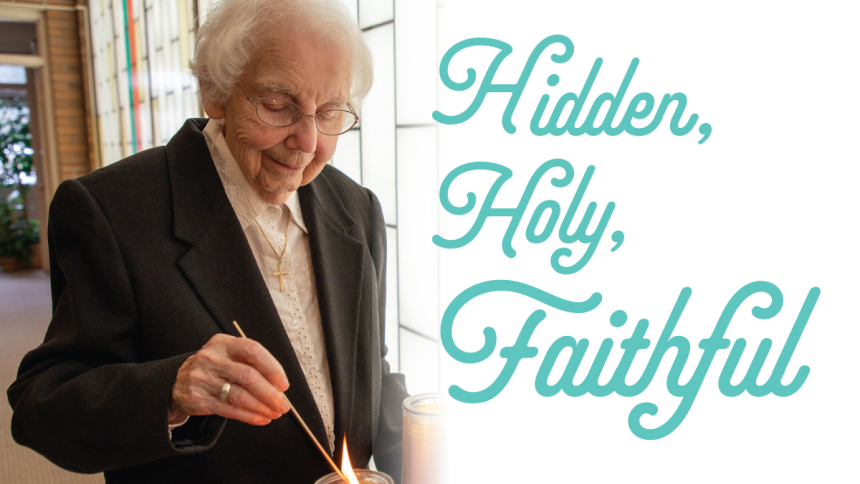
Inside the quiet, cloistered walls of the Sacramentine Monastery in Conway, a remarkable life of hidden faith continues to unfold. Sister Mary Rosalie Smith, OSS, has spent nearly her entire life behind these walls, dedicating her days to prayer, silence and devotion to God.
For 80 years, she has faithfully lived her vocation as a Sister of the Blessed Sacrament and of Our Lady, often called the Sacramentine Sisters, offering her life in prayer before the Eucharist and quiet intercession for the world. Now 97 years old, Sister Rosalie celebrated this extraordinary milestone on Nov. 21, 2025, marking eight decades of religious life and a lifelong “yes” to God that continues to inspire the Church.
Looking back over nearly a century of life, she speaks with simple gratitude and humility. “Living to 97 years is all God’s doing,” she reflects. “This is a gift from God.” Through decades of prayer, she has carried the needs of others to God each day. That commitment began with a calling she first recognized when she was still a child.
“I wanted a cloistered life,” she offers. “I wanted more time dedicated to prayer.” That desire became the “yes” that would shape the rest of her life.
A Calling that Began in Childhood
Sister Rosalie was born Jan. 1, 1929, in Queens, New York. When she was 11, her family moved to Nova Scotia, where she continued her Catholic education and grew deeper in her faith.
“At 9 years old, I read The Life of the Little Flower,” she said, referring to St. Thérèse of Lisieux. The story of the young Carmelite saint who lived a hidden life of prayer and sacrifice made a profound impression on her. “After reading that, I wanted to be a cloistered nun,” she said.
At first, she had imagined a different path in religious life. She thought about becoming a teaching sister and serving the Church through education. But the example of St. Thérèse continued to draw her toward a more contemplative vocation.
“I thought about teaching,” she said. “But after reading about the Little Flower, I wanted to give myself completely to prayer.” Even at a young age, she sensed that God might be inviting her to a life centered entirely on him.
Her teenage years unfolded during the uncertainty of World War II. Though she lived far from the battlefields, the war touched daily life in Nova Scotia. “My brother was in the war, and several of my cousins were in World War II,” she recalls.
“My brother was stationed in Montreal.” Like many families at the time, they experienced the challenges of rationing. “We had rationing for food and shoes,” she remembers. “Tea and coffee were a big thing with rationing, too.”
“Because Nova Scotia sits along the Atlantic coast, the war also brought a sense of caution and vigilance to the region,” she says. “Communities held nighttime blackouts to avoid attracting German submarines that operated in the Atlantic.”
She continues: “We had blackouts because they didn’t want the Germans gaining attention.” Even as a teenager, she understood the seriousness of the situation. “I was very aware of the war,” she reflects.
Another moment of sorrow marked her youth when her mother died of cancer when Sister Rosalie was just 14 years old. Both of her parents would eventually die from cancer. “Though painful, the loss did not weaken my faith,” reflects Sister Rosalie.
“Instead, it deepened my sense of trust in God and the fragile nature of life.” After finishing high school in Nova Scotia, Sister Rosalie returned to the states and entered the Sacramentine Sister in Yonkers, New York. “I joined when I was 16,” she said.
“My final vows came when I was 21 years old, marking the beginning of a lifetime commitment to prayer and religious life,” reflects Sister Rosalie. Today, as she reflects on that decision, she speaks with peaceful confidence. “Everything he sends is for the best,” she says. “You can’t go wrong following God’s inspirations.”
A Hidden Life of Prayer
In 1951, Sister Rosalie helped establish a foundation of the Sacramentine Sisters in a large—but temporary—residential home in Petoskey. Then in 1960, the sisters moved to Conway, where she has lived ever since. For more than six decades, that monastery has been the center of her life.
“The Sacramentine Sisters live a cloistered vocation dedicated to Eucharistic adoration and prayer for the needs of the Church and the world. Our life is intentionally hidden from public view so we can focus fully on our spiritual mission,” describes Sister Rosalie.
“Cloistered means we do not go out, only for necessities.” Instead, their days follow a rhythm of prayer, work and silence. The purpose of that quiet life is simple but profound. “When you are cloistered, you stay in prayer,” she says.
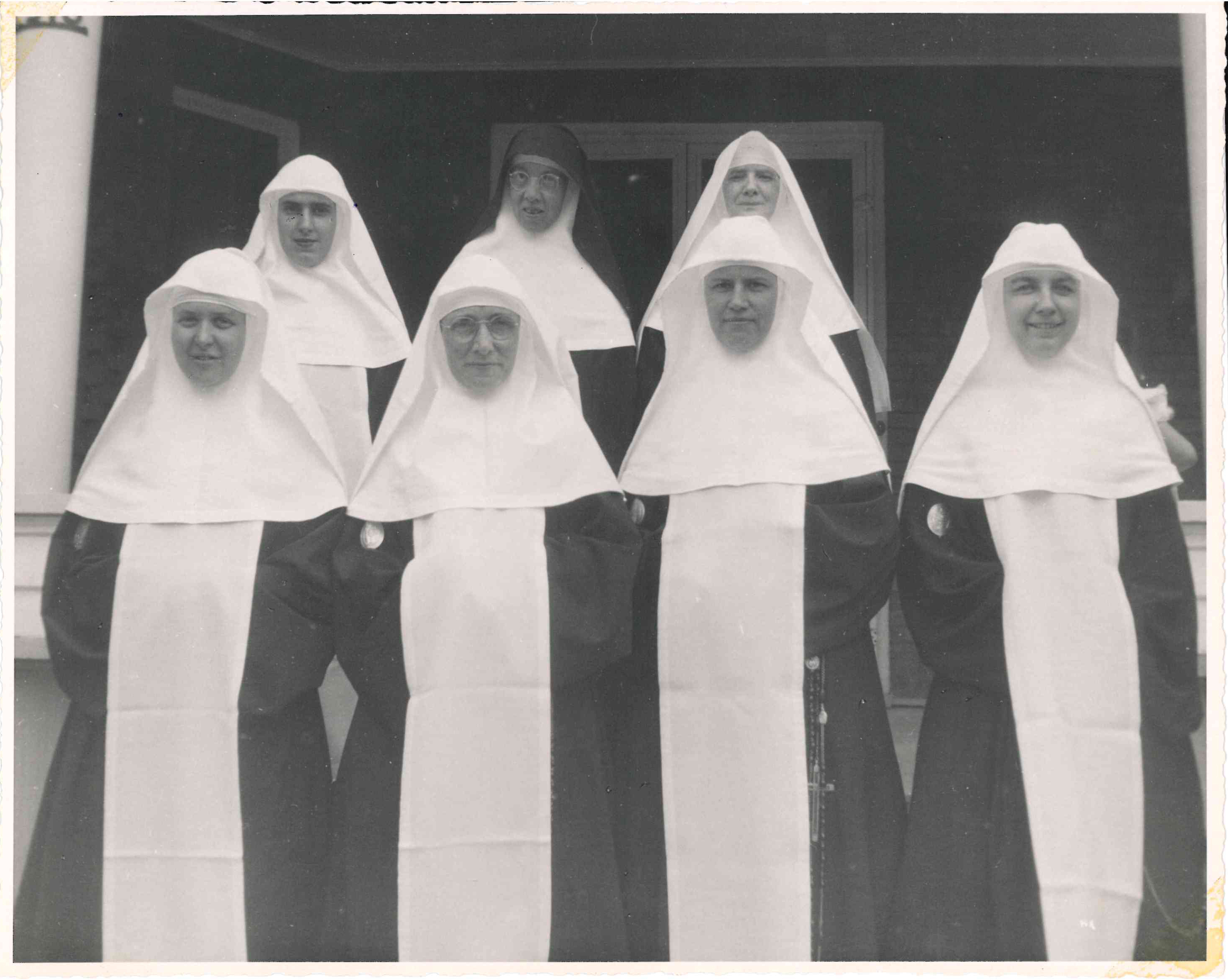
For Sister Rosalie, prayer has always been the heart of her vocation. Each day, she carries the intentions of others before God.
“There is always something to pray for,” she says. “I pray for everyone.” She believes the quiet of the cloister allows her to remain focused on that mission. “Prayer is really a big part of my life,” she says. “I don’t have things to distract me.”
The sisters live simply and without many of the comforts common in modern life. Sister Rosalie describes her years in the monastery as peaceful and uncomplicated. “I lived a quiet life,” she recalls. “I ate simple food, and we didn’t have television or radio.”
Yet that simplicity has allowed her to see God’s presence in the ordinary beauty of creation. “I see God in the beautiful clouds, the blue sky and the flowers,” she reflects. “It is so uplifting. This is all God’s beauty. Just think, if the world is this beautiful, how much more beautiful must God be?"
During her long life in the convent, she has also witnessed important changes in the Church. One of the most memorable came after the Second Vatican Council, when the liturgy moved from Latin to local languages. For someone who had prayed in Latin for many years, the transition to English felt like a special gift. “Most of our prayers were in Latin,” she says. “Going from Latin to English was a real treat.”
“In 1990, I traveled to Germany to see the Oberammergau Passion Play,” Sister Rosalie recalls. “The trip included a visit to Rome that became one of the most memorable moments of my life.”
“We stopped at the Vatican and had Mass with Pope St. John Paul II,” she reflects. “It was a private Mass.” Even decades later, she remembers the experience with gratitude and wonder. “It was such a treat,” she recalls. “The Vatican has so many things that inspire awe.”
One small moment during that visit remains especially meaningful to her. “I was by the altar at noon, and an American priest was there,” she reflects. “We said the Angelus together, and it was so beautiful.” Though she has had opportunities to travel, most of her life has unfolded quietly within the monastery walls. For Sister Rosalie, that hidden life has been a source of deep joy. “As a nun, I am married to Jesus Christ,” she says.
Eighty Years of Saying ‘Yes’
When Sister Rosalie reflects on her 80 years in religious life, she does not speak about accomplishments or achievements. Instead, she talks about trust in God and the importance of placing one’s life in his hands. Her faith is rooted in the words of Christ in the Gospel.
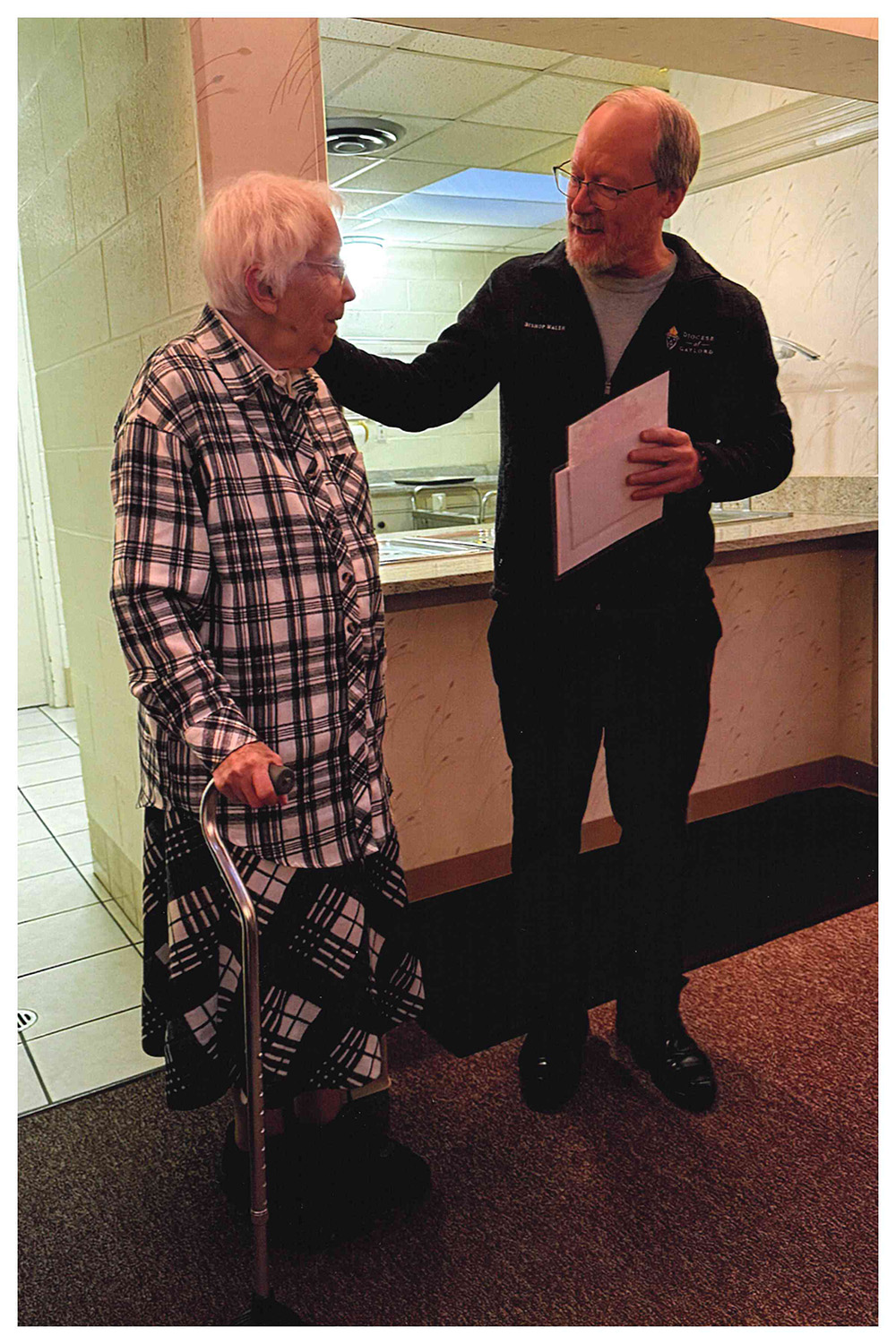
religious life, Bishop Walsh presented
Sister Rosalie with a gift of a tree that was
planted at the Sacramentine Monastery in
Conway, Michigan, in her honor.
“Jesus said ask, and you shall receive,” she says. She believes that when people trust God fully, he guides them in the direction that is best for them. “We will receive what God gives if we put our will in his hands,” she offers.
That trust has shaped her outlook on life in a remarkable way. Even after decades of challenges and losses, she carries a quiet sense of peace. “I am not one to worry,” she reflects. “The simplicity of the cloister has helped me remain focused on what truly matters.”
“There is always something to pray for,” she attests. Through her prayers, she intercedes for people she may never meet, but whose lives are touched by her quiet devotion.
At 97 years old, she also understands how precious each day can be. “Life has taught me that tomorrow is never guaranteed,” reflects Sister Rosalie. “We don’t know if we have tomorrow,” she says. Because of that awareness, she begins every morning with a prayer that reflects her deep trust in God. “I get up in the morning and say, ‘Dear God, if today is my last day, let it be the best day.’”
That simple prayer captures the heart of her vocation. For Sister Rosalie, religious life has always been about offering each day faithfully back to God. Her “yes” began when a young girl read about St. Thérèse and dreamed of giving her life completely to Christ.
Today, that “yes” still echoes in the quiet chapel of the Sacramentine Monastery. Through her quiet witness, Sister Rosalie reminds the faithful that some of the most powerful acts of grace happen in silence. After 80 years of religious life, she continues to offer the same response she gave as a young woman entering the cloister—a faithful and enduring “yes” to God.